
Debt Collector Harassment (FDCPA)
When collectors cross the line, federal law is on your side.
The Fair Debt Collection Practices Act (FDCPA) is a federal law that makes it illegal for debt collectors to harass, threaten, or deceive you. Georgia's Fair Business Practices Act adds further protection. If a collector broke these rules, you may be owed money — and they may have to pay your attorney's fees.
Results in FDCPA and TCPA cases
See how the firm has held debt collectors and robocallers accountable for consumers under federal law.
Common violations we see
- Calling repeatedly or at all hours to annoy or harass you
- Threatening arrest, lawsuits, or wage garnishment they can't or won't pursue
- Using profane, abusive, or threatening language
- Calling your family, employer, or neighbors about your debt
- Continuing to call after you asked them in writing to stop
- Trying to collect a debt you don't owe or that isn't yours
- Misrepresenting the amount you owe or who they are
- Failing to validate the debt after you requested verification
Related topics
Related articles
View all articles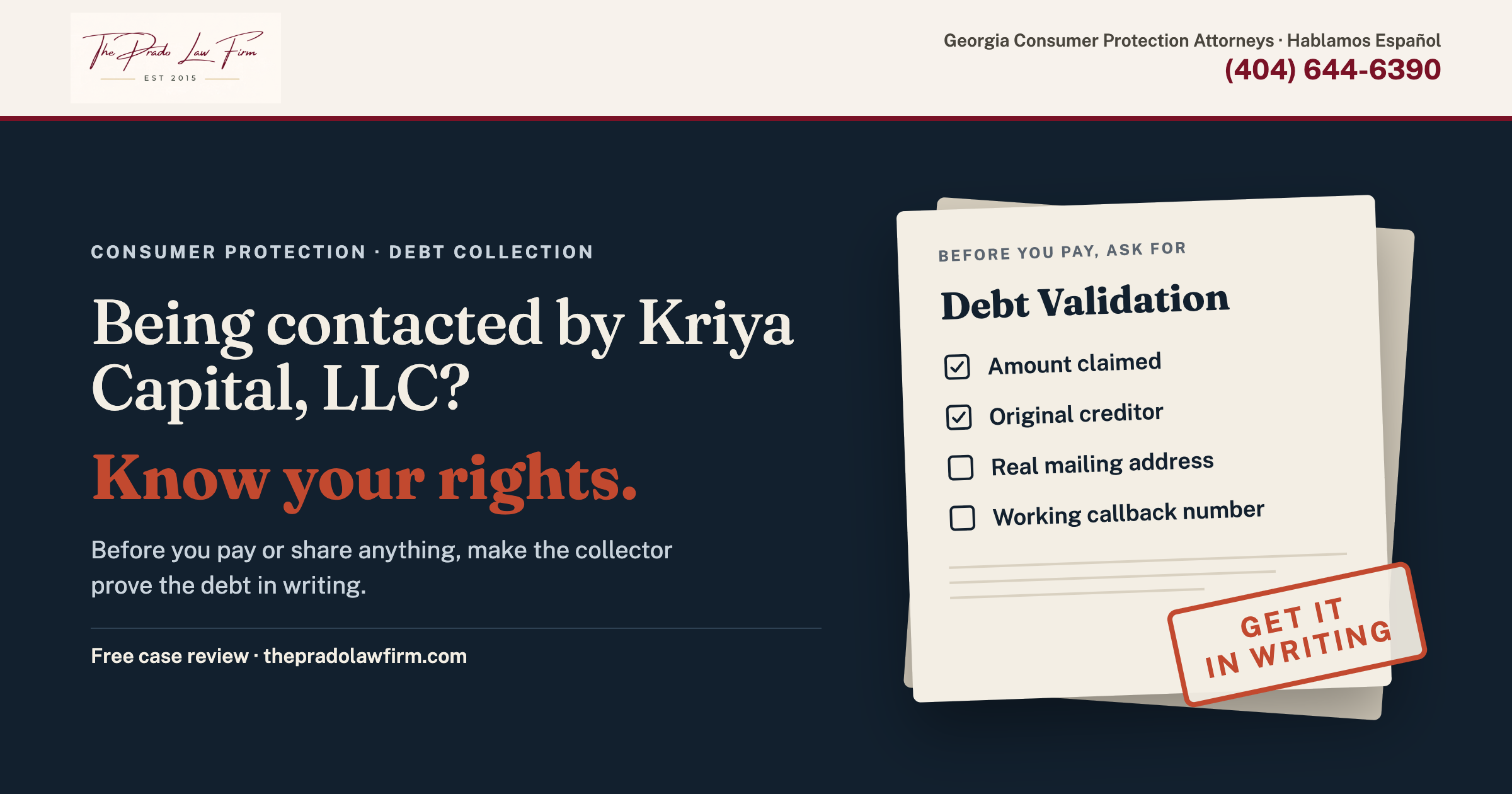
Being Contacted by Kriya Capital, LLC? Know Your Rights
Kriya Capital, LLC appears in federal consumer complaint data as one of the more heavily complained-about debt collectors in the country — yet, unusually for a company at that complaint volume, it keeps a very low public profile. Here’s what to know if you’ve been contacted in its name.
Read more
Being Contacted by I.C. System? Know Your Rights
I.C. System, Inc. is a large, Minnesota-based third-party debt collector that works primarily in healthcare and telecom collections — and one that has faced a federal class action over the clarity of its collection letters. Here’s what to know if it’s contacting you.
Read more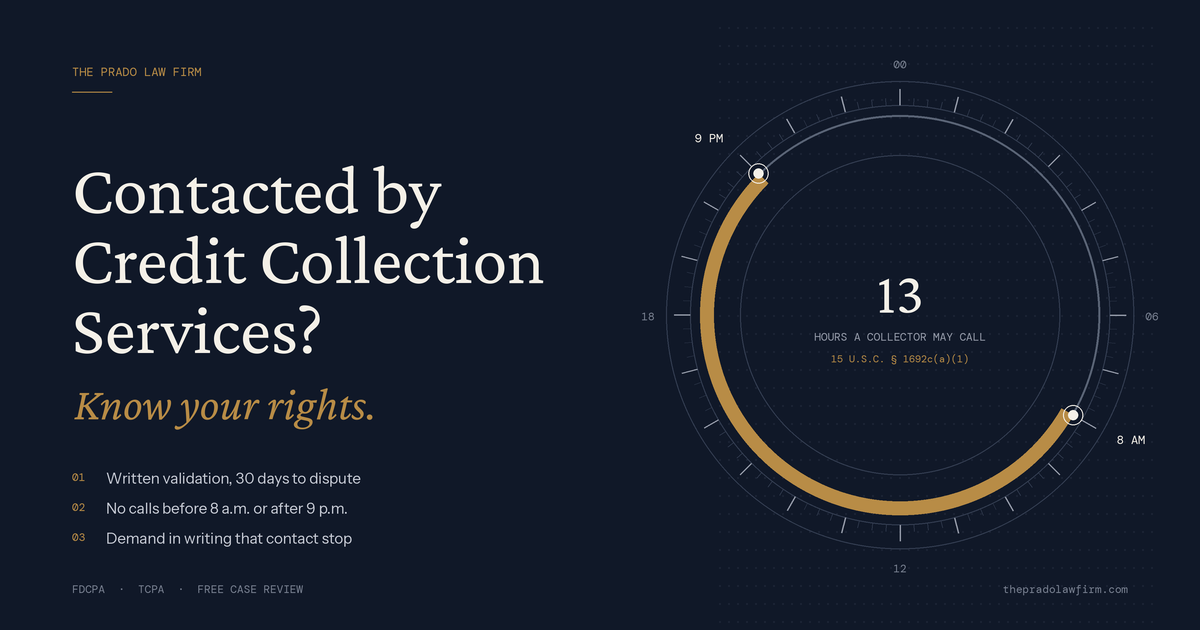
Being Contacted by Credit Collection Services (CCS)? Know Your Rights
If a call or letter references Credit Collection Services, CCS Financial Services, or simply “CCS Offices” on your caller ID, you’re dealing with one of the higher-volume third-party debt collectors tracked in federal complaint data. Here’s what to know.
Read moreWhat happens next
1. You tell us what happened
Answer a few questions or send a short message. It takes minutes and it's completely confidential.
2. We review it for free
An attorney reviews your situation and we contact you — usually within one business day — to talk it through.
3. We take on the company, not you
If you have a case, we handle it. In most consumer-protection cases, the company pays our fees when we win.
Stop the harassment. Find out where you stand.
A free, confidential case review is the fastest way to learn whether the law was broken.
Start a free review for this