Data privacy and security compliance, built to hold up.
We design privacy programs and the documents around them for companies that collect, use, and share personal data — grounded in real in-house experience running privacy and security for organizations that handled health records and the data of millions of consumers.
What we do
- Privacy program design and gap assessments against your actual data practices
- Privacy policies, notices, and consumer-facing disclosures
- Data mapping and inventories so you know what you hold and where it flows
- Vendor and data processing agreement (DPA) review and negotiation
- Breach-response planning, tabletop exercises, and incident playbooks
- State privacy law readiness (and GLBA / HIPAA-adjacent obligations where relevant)
- Data retention and deletion schedules that match your systems
Who this is for
Founders
You're collecting user data and need a defensible privacy posture before your next customer or investor asks for it.
Operations leads
You need policies and vendor terms that match how data actually moves through your tools.
Compliance officers
You want a right-sized program and documentation you can show a regulator or enterprise customer.
Typical deliverables
- A written privacy program and prioritized gap assessment
- Published privacy policy and internal handling standards
- A data map and vendor/DPA review summary
- A breach-response plan and notification playbook
Related insights
View all insights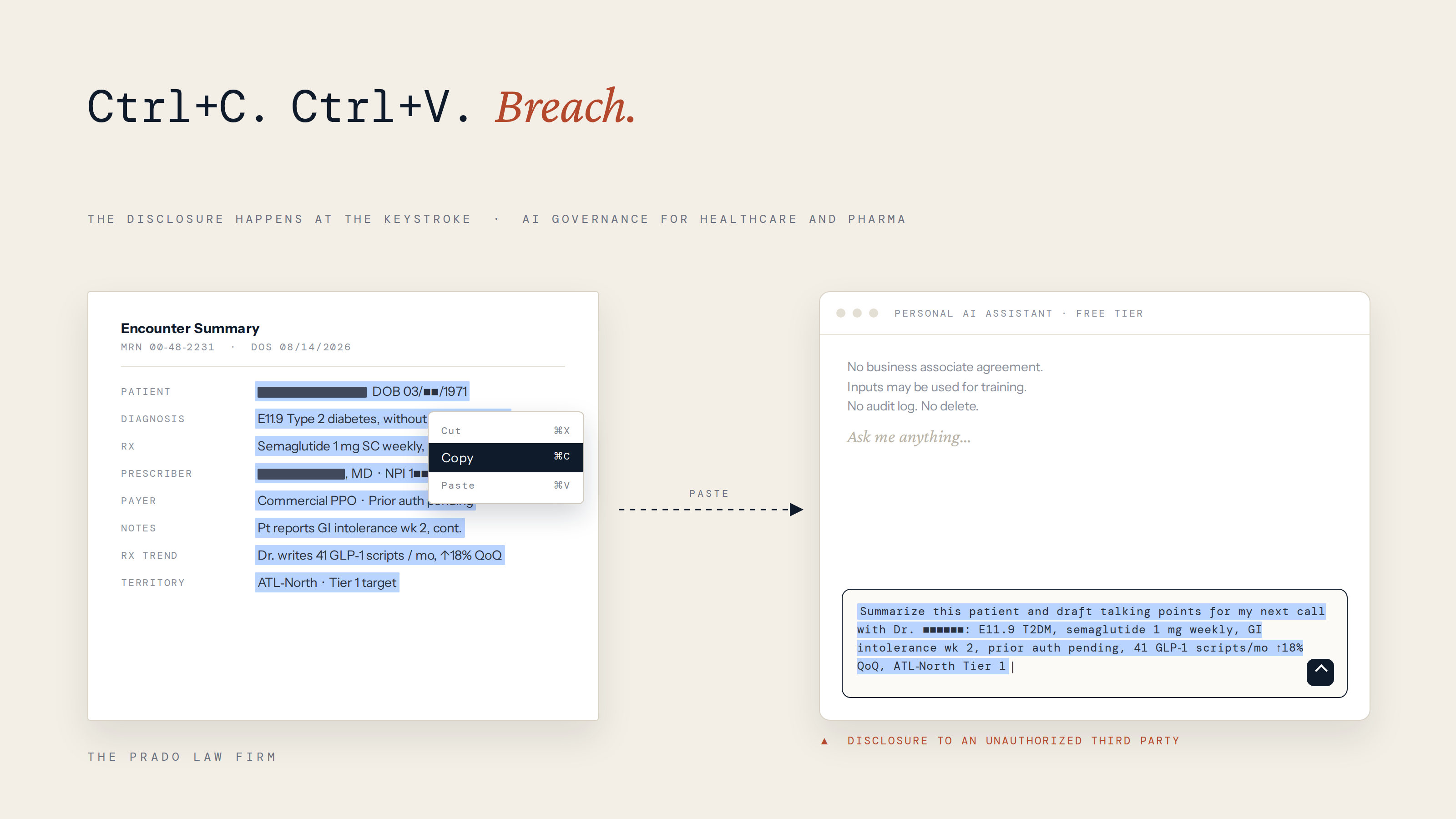
"Move Fast and Break Things" Does Not Work When the Thing You Break Is Patient Privacy
Typing a patient's record or a physician's prescribing data into a consumer AI tool is a disclosure to a third party, and usually a breach of confidentiality. HIPAA presumes a breach unless the vendor has signed a business associate agreement, and prescriber data is locked down by license terms and the AMA's opt-out program even though HIPAA does not cover it. Most healthcare workers are already using personal AI accounts at work.
Read more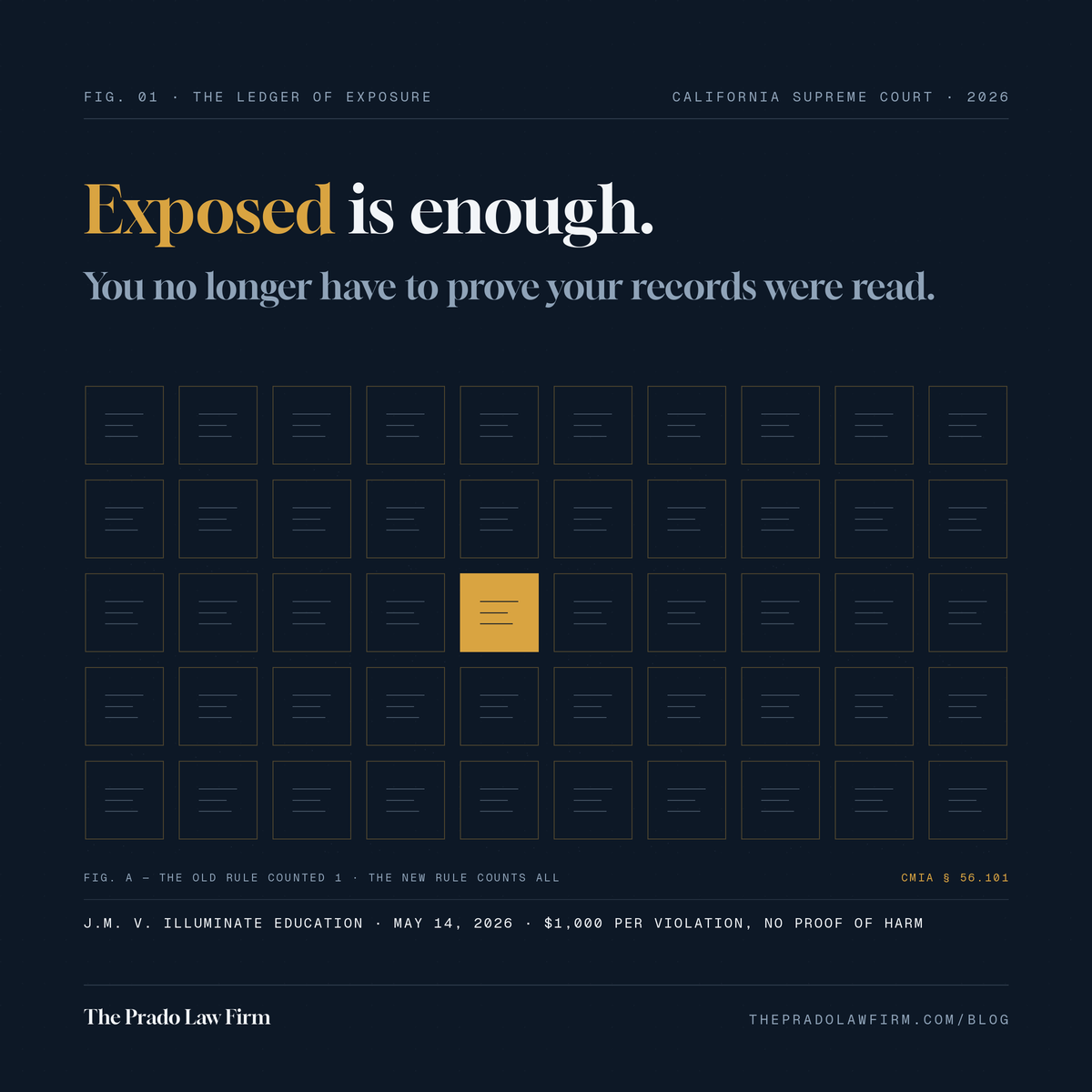
California Changed the Rules on Protected Health Information. Here Is What It Means for You.
If your medical information was caught up in a data breach, California courts used to ask a question that was almost impossible to answer: can you prove a hacker actually looked at your records? For most people, the answer was no, and their cases were dismissed before they ever got started. In May 2026, the California Supreme Court threw that requirement out. The decision, J.M. v. Illuminate Education, Inc., is the most consequential ruling on protected health information (PHI) in years, and industries from hospitals to ed-tech companies are still adjusting to it.
Read more
The $1.55M Mistake Healthcare Marketers Are Making Outside HIPAA
There is a category of company that has spent a decade believing it sits in a regulatory quiet zone. It handles health-adjacent data every day but is not a hospital, not a health plan, not a business associate. It runs HCP engagement programs, pharmaceutical brand media, condition-education publishing, patient-finder campaigns, and the advertising technology that measures all of it. Its privacy program, if it has one, was built around a single question: are we a HIPAA covered entity? The answer was no, and the analysis stopped.
Read moreSchedule a consultation
Tell us a little about your company and what you need. We'll respond within one business day.
This page is attorney advertising and provides general information only. It is not legal advice and does not create an attorney-client relationship. Contacting the firm does not make you a client. The Prado Law Firm, LLC is located in Atlanta, Georgia.